
Oral cancer is one of the few cancers dentists see coming and still, too often, catch too late. Most cases are visible during a routine exam, yet nearly 3 in 4 aren’t identified until a late stage, when five-year survival drops from roughly 88% to just 37%. The problem isn’t awareness. It’s that dental teams have never had a simple, connected process for turning a screening finding into an actual answer.
That’s what we built the SHINE Protocol to solve, and why we’re excited to share our expanded partnership with OralID.
Two tools, one connected pathway
OralID’s light-based exam has helped dental teams spot tissue changes that a standard visual exam alone can miss, for years. What’s been missing is a clear next step. A flagged lesion could mean nothing, or it could mean everything, and until now, finding out has usually meant a referral, a second visit, or a waiting period that leaves patients anxious and providers guessing.
OraLiva’s test closes that gap. It’s a simple, non-invasive brush biopsy that can be collected in the same visit, right after a lesion is flagged, and sent to our CLIA-certified lab for an objective, AI-powered risk score.
Together, OralID and OraLiva now offer a single pathway: SHINE.
The SHINE Protocol
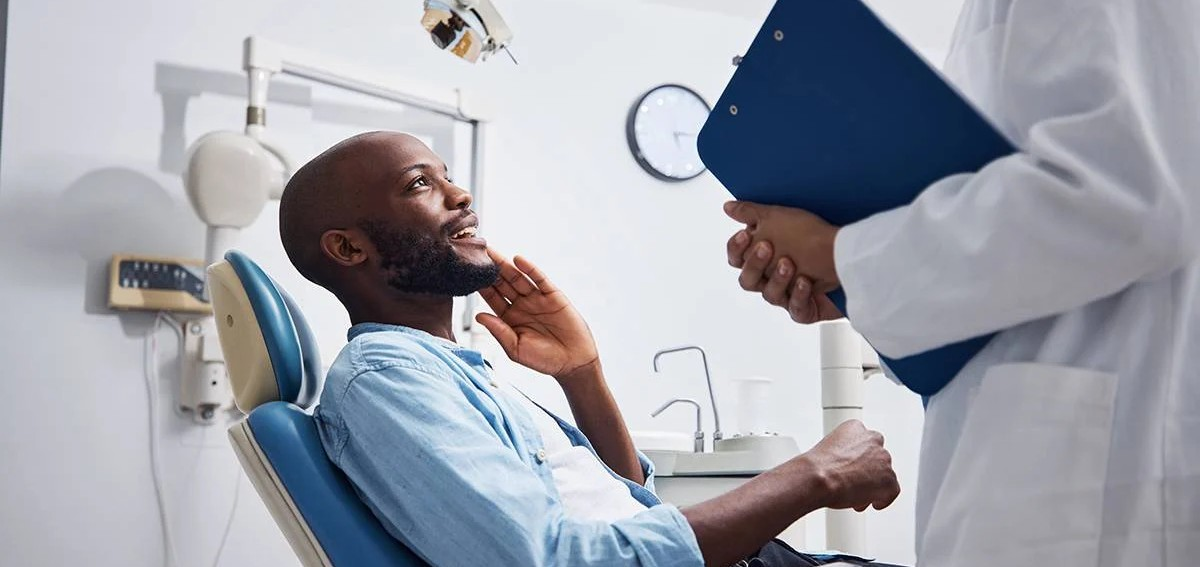
S: Screen. Every visit starts with a comprehensive oral exam, the same trusted first step your team already performs.
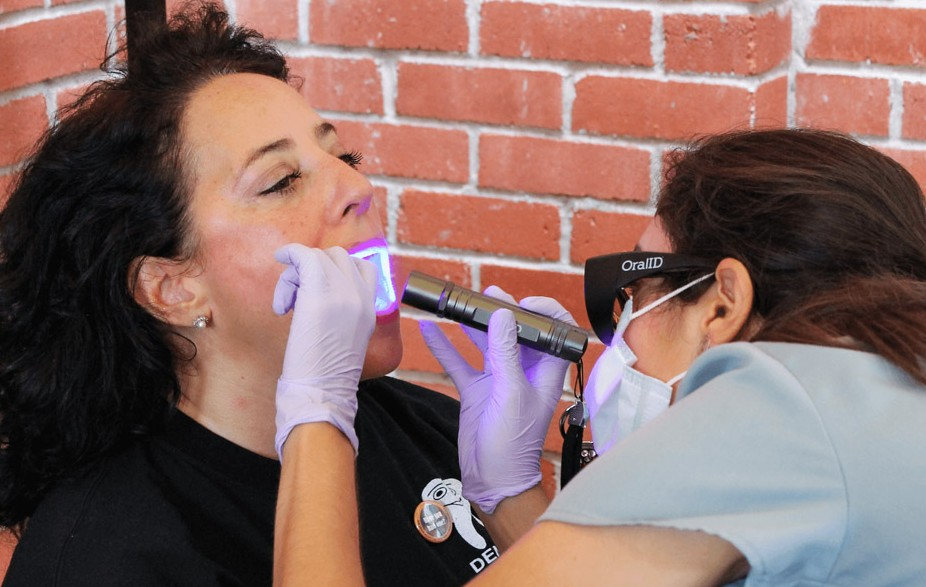
H: Highlight. A fluorescence exam with OralID reveals tissue changes that can be difficult to catch with the naked eye, adding a more sensitive layer of screening to the exam you’re already doing.
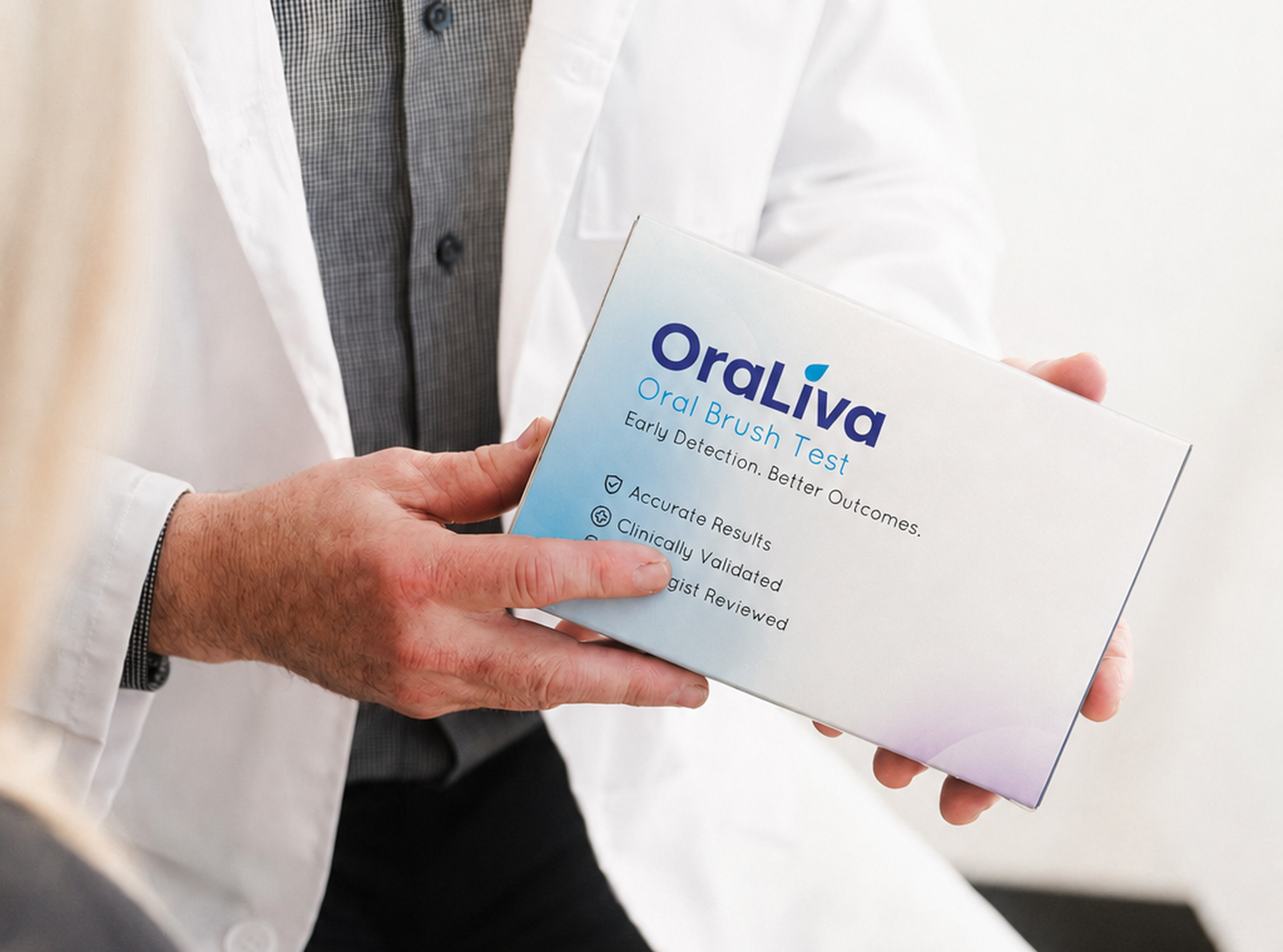
IN: Investigate. If OralID’s exam flags a lesion, there’s no need to wait and see. Investigate right away, in the same visit, with OraLiva: a simple brush sample is collected on the spot and shipped to our lab in a pre-paid kit, no scalpel, no separate procedure, no separate appointment.
E: Evaluate. The result is an OCNI, or Oral Cancer Numerical Index: a clear, objective risk score that tells you whether to reassure and continue normal recall, monitor and retest, or refer for biopsy and specialist evaluation.
Four steps, one visit, and a clear next step for every patient.
Backed by real coverage
This isn’t just a clinical workflow, it’s one that payers are already standing behind. Delta Dental plans in Michigan, Ohio, Indiana, and North Carolina recently announced they’ll reimburse OraLiva’s test under CDT D7288, the existing brush biopsy code, with more states expected to follow. For dental teams, that means adopting SHINE doesn’t require navigating new billing codes or waiting on coverage decisions, the pathway is already reimbursable today.
Our Lunch & Learn is now CE accredited, so training your team on SHINE can count toward continuing education requirements.
What this means for your practice
SHINE doesn’t ask you to change how you practice. It connects two tools you may already trust into one pathway, so a finding during a routine exam doesn’t sit in limbo. Screen, highlight, investigate, and evaluate, all in a process built around the visit you’re already having with your patient.
Interested in bringing the SHINE Protocol into your practice? Reach out to get started.